Whovile University: A Designer’s Review
As an embroidery designer who has spent years digitizing and testing files for commercial use, I approach every new machine embroidery design with a critical eye. It is not just about whether the artwork looks cute on a screen; it is about how that design performs when stitched out on real fabric, under the stress of daily wear, and within the context of a small business brand. Recently, I had the opportunity to review Whovile University, a design that immediately caught my attention for its potential in the branded merchandise space. While categorized under Back To School, the versatility of this piece extends far beyond seasonal academic apparel, making it a compelling asset for boutique owners, Etsy sellers, and custom apparel decorators.
First Impressions: Visual Personality and Brand Fit
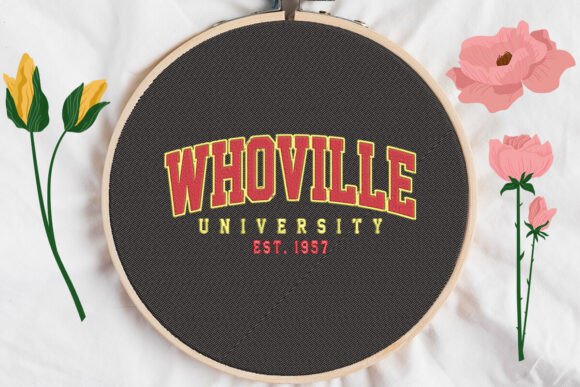
The first thing you notice about Whovile University is its distinct visual personality. It strikes a balance between playful nostalgia and professional structure. The typography and layout suggest an institution of learning, yet the styling feels approachable rather than rigid. For a small business owner, this duality is valuable. It does not scream "corporate uniform," nor does it feel too juvenile for adult audiences. Instead, it offers a whimsical, storybook quality that can elevate a brand’s identity by adding a layer of charm and creativity.
When evaluating this as a digital embroidery file, the initial aesthetic suggests it would work beautifully for creative studios, independent bookshops, bakeries, or any brand that wants to convey a sense of community and craftsmanship. The design feels handmade and premium, which is exactly what customers look for when purchasing high-quality small business merch. It avoids the sterile look of mass-produced graphics, offering instead a textured, tactile appeal that only embroidery can provide.
Real-World Application for Small Businesses
The true test of any embroidery design is its adaptability. The product description notes that Whovile University Embroidery Design allows you to embroider it onto various items, such as pillows, tote bags, jackets, or even framed artwork. From a production standpoint, this versatility is crucial for maximizing return on investment. Here is how I envision this design performing in real business scenarios:
- Branded Patches: This is perhaps the strongest use case. An embroidered patch featuring the Whovile University logo can be produced in batches and applied to denim jackets, canvas backpacks, or limited-edition caps. Patches allow for inventory flexibility, letting you add branding to blank goods without committing to large runs of custom-printed items.
- Staff Uniforms and Aprons: For cafés, florists, or craft breweries, staff apparel is a walking billboard. Using this design for apron embroidery adds a touch of sophistication. It transforms a standard work uniform into a curated part of the customer experience, reinforcing brand recognition every time an employee interacts with a client.
- Tote Bags and Merchandise: A tote bag design featuring this logo appeals to the eco-conscious consumer. Because the design is versatile, it can be scaled to fit the center of a bag or placed subtly on a corner pocket. This makes it ideal for event merch, farmer’s market giveaways, or retail purchases over a certain amount.
- Cap Embroidery: Placing the design on the front or side of a baseball cap creates a trendy, streetwear-inspired look. However, this requires careful attention to curvature and stitch count, which I will address in the technical notes below.
Strategic Placement and Technical Considerations
While the aesthetic appeal of Whovile University is strong, successful execution depends on technical precision. As a designer, I advise caution in specific applications to ensure the finished product meets professional standards.
Stitch Density and Fabric Texture: One must consider the stitch density relative to the fabric texture. If you are stitching this onto a lightweight cotton tote or a delicate silk blend, high density can cause puckering. Always use the appropriate stabilizer—cut-away for stretchy fabrics like jersey tees, and tear-away for stable woven materials like canvas or denim. Testing on scrap fabric identical to your production material is non-negotiable.
Small Scale Legibility: If you plan to use this as a chest logo on a polo shirt or a small detail on a cuff, verify that the lettering remains legible. Tiny details can get lost if the design is scaled down too far. I recommend creating a printable mockup at actual size to check readability before hooping the final garment. If the design includes fine lines or small text, ensure your machine’s needle and thread weight are suitable for detailed work.
Curved Surfaces: For cap embroidery, the curved surface of the front panel can distort designs if not properly stabilized with cap frames and backing. Ensure the design is centered correctly and that the pull compensation settings in your digitizing software (if you are editing the file) or the pre-digitized settings account for the curve.
Enhancing Brand Identity and Customer Trust
In the world of handmade goods, perception is reality. Using a well-executed embroidery design like Whovile University significantly impacts brand identity. It signals to the customer that attention to detail matters. Unlike printed ink, which can crack or fade, embroidery offers durability and a tactile luxury that justifies a higher price point. This perceived value builds customer trust and encourages repeat business.
Furthermore, consistency in visual assets is key. When you use the same high-quality design across your design assets—from your website headers to your physical custom apparel—you create a cohesive brand narrative. Whovile University serves as an anchor for this narrative, providing a recognizable symbol that customers can associate with your shop’s values of quality and creativity.
Practical Designer Notes for Production
Before launching this design into your production line, follow these practical steps to ensure success:
- Test in Black and White: Before committing to colorful threads, stitch the design out in black thread on white fabric. This reveals any issues with spacing, connectivity, or density without the distraction of color.
- Check Thread Color Contrast: Choose thread colors that contrast well with your base fabric. If using dark uniforms, ensure the design pops. Consider using metallic or variegated threads for a premium look, but test them first as they can behave differently than standard polyester.
- Confirm Hoop Size: Verify that the design fits within your available hoop sizes. If the design is large, you may need a larger hoop or a re-digitized version optimized for smaller hoops.
- Review Commercial Licensing: Always confirm the license terms associated with the digital embroidery file. Ensure you have the right to use it for commercial purposes, especially if you are selling the finished items or using them for branded promotional goods.
- Create Client Mockups: If you are doing this for a client, present a realistic mockup showing the design on the specific garment type. This manages expectations and reduces the likelihood of revisions after stitching.
In conclusion, Whovile University is more than just a seasonal Back To School graphic. It is a versatile, professionally viable asset for any small business looking to enhance its merchandise offerings. By paying attention to technical details like stabilizer choice, fabric compatibility, and placement, you can leverage this design to create high-value, memorable products that strengthen your brand identity. Whether used for a charming café apron or a stylish boutique tote, this embroidery design offers the perfect blend of whimsy and professionalism needed to stand out in today’s crowded marketplace.